
Loved the Greek Salad you had in Greece on holiday? Now you can make it at home! This Authentic Greek Salad (AKA Horiátiki Salata) is incredibly simple to make, but tastes just like you are back in Greece!
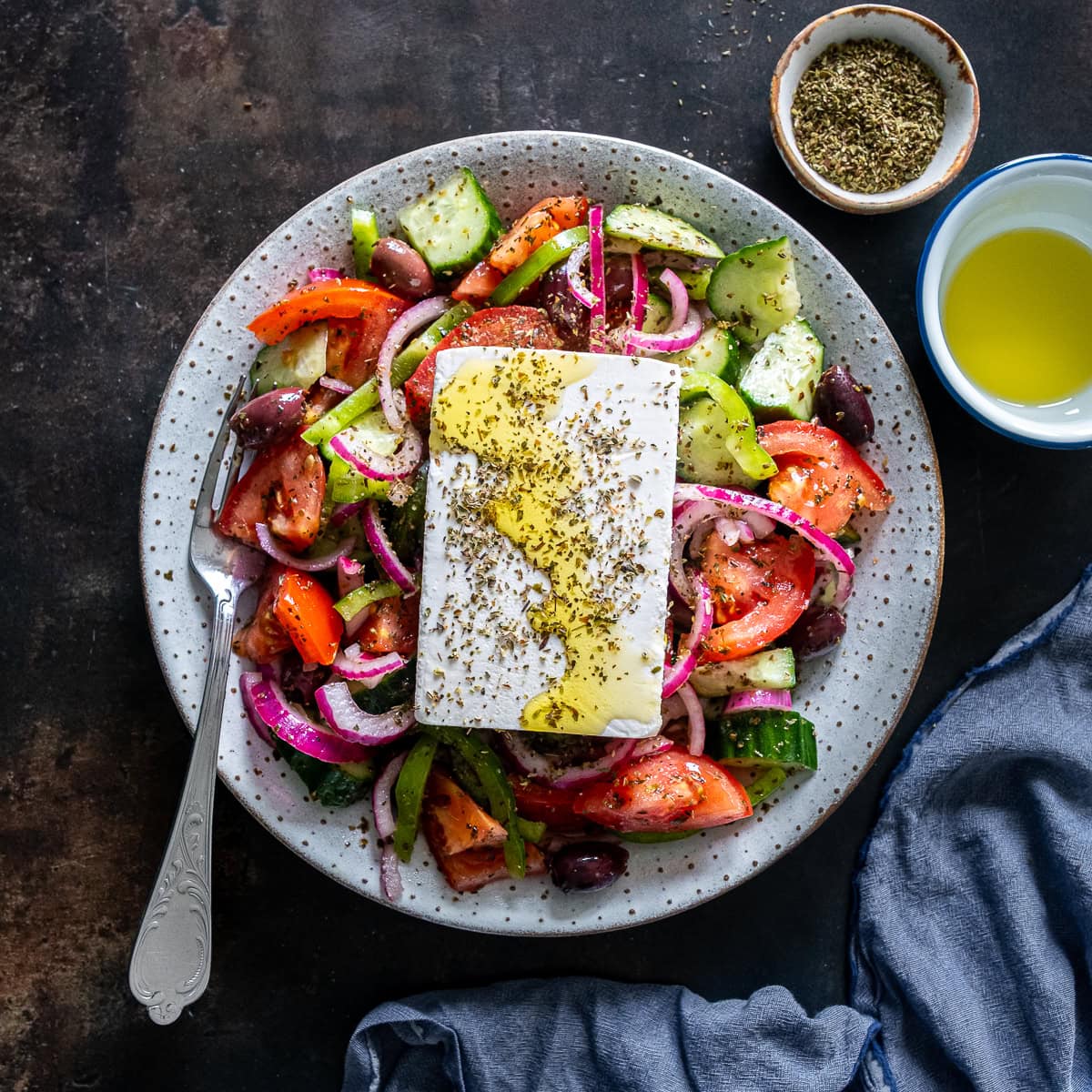
Greek Salad – just like you had on holiday!
My family and I went to Greece on holiday this year… and I think I may have literally eaten my bodyweight in Greek Salad 😂
I’m pretty sure I had it with every single meal (OK, maybe not breakfast!) and, honestly? I just could not get enough of it!
We were staying in a lovely AirBnB, with a fully equipped kitchen, so I spent A LOT of time re-creating the authentic Greek salads we had in the various restaurants, vineyards and cooking classes we went to during the holiday, tinkering with it to get it “just right”.
And by the end of the holiday, I was really pleased with the results – my version tasted exactly like the very best versions we had on holiday.
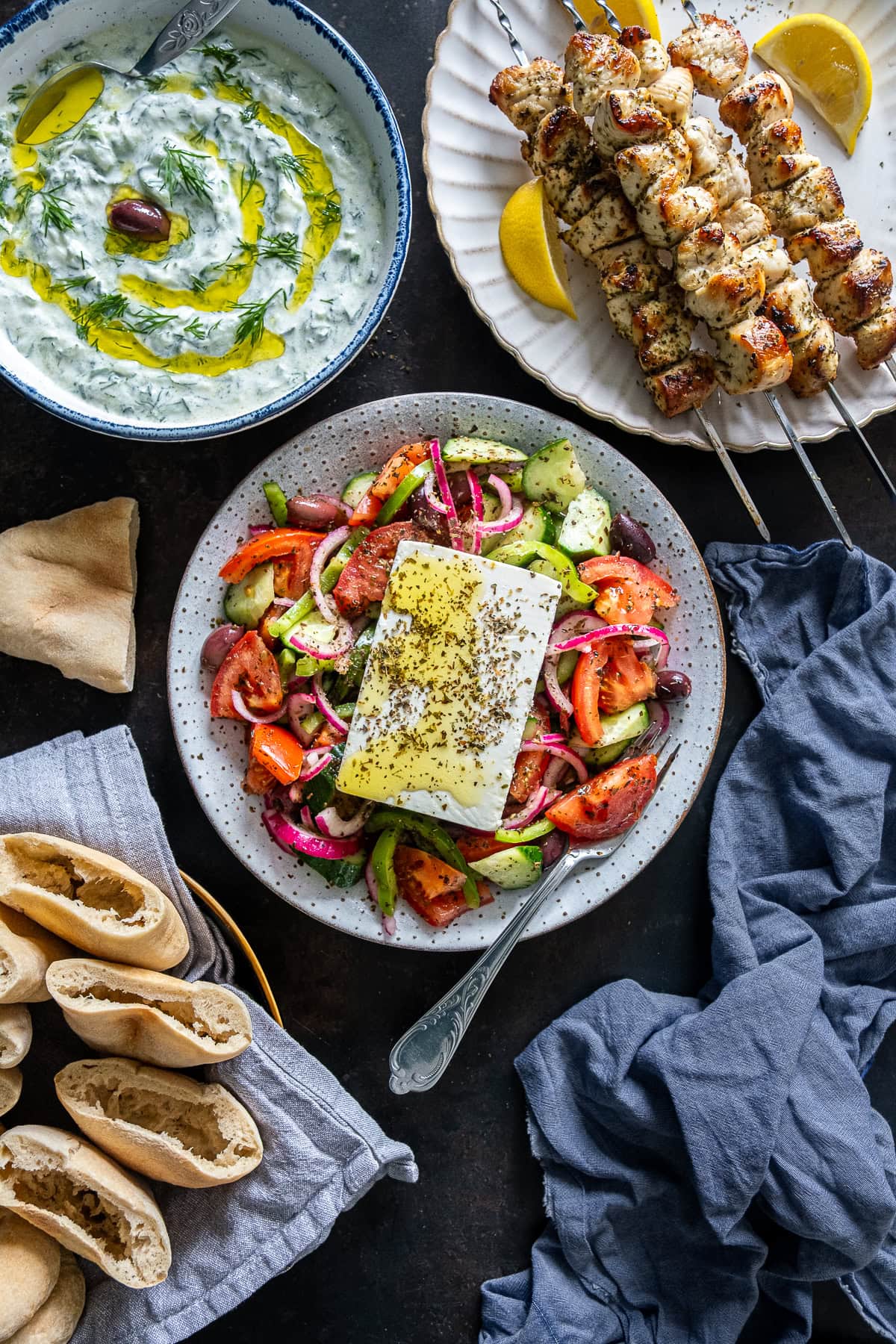
What do Greek people call Greek Salad?
Greek people usually call Greek Salad “Horiátiki Salata” (Horiátiki is pronounced hoh-ree-AH-tee-kee), which means “village salad” or “peasant salad”.
This is because it was the sort of salad traditional peasant farmers would eat while they were working out on the fields.
(I can’t help thinking that traditional Greek farmers had a much better deal than traditional British farmers 😂)
What does an authentic Greek salad contain?
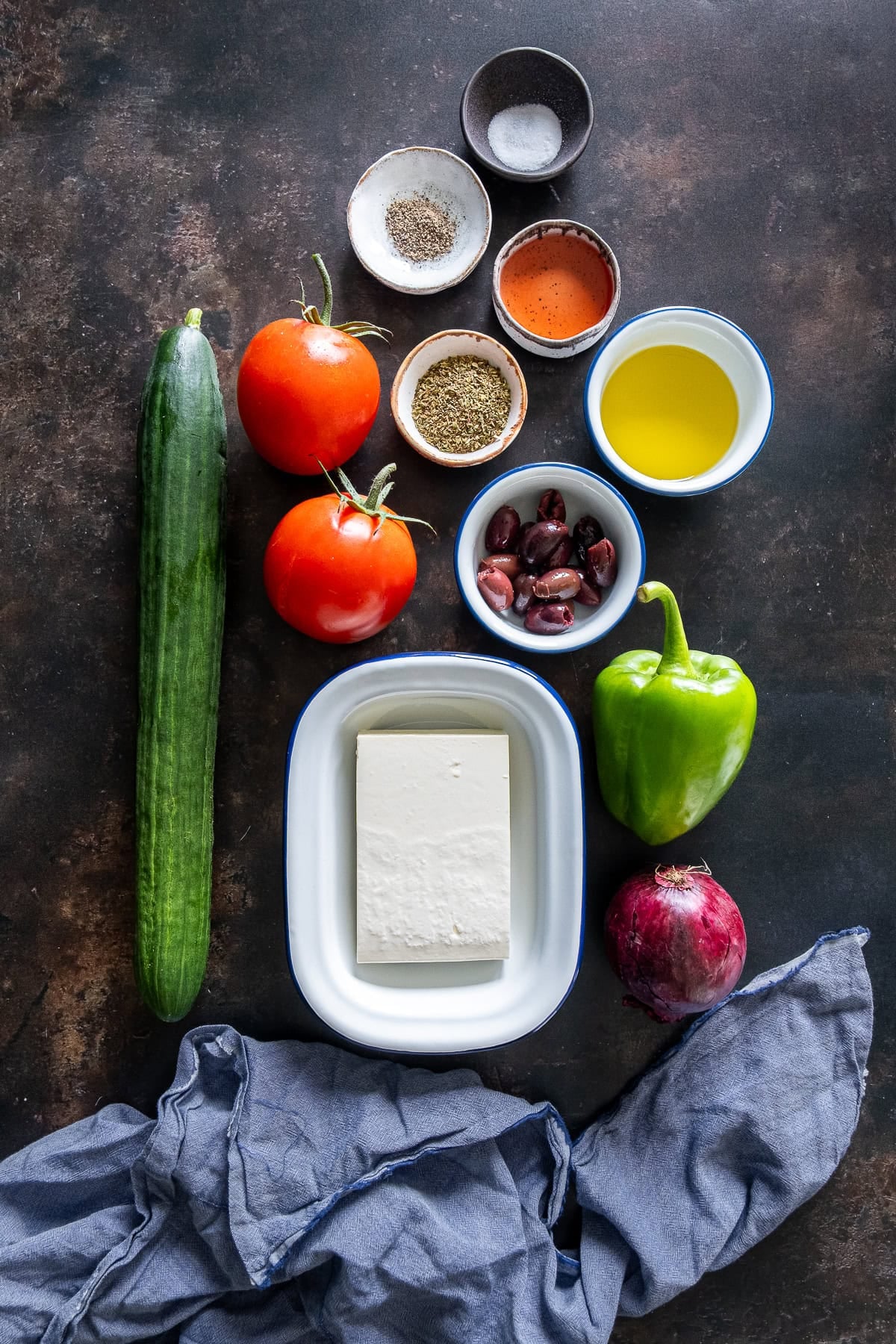
Of course, every Greek restaurant and Greek home cook will have their own slight variations. However most of the authentic Greek salads I tasted in Greece had remarkably similar ingredients, which were:
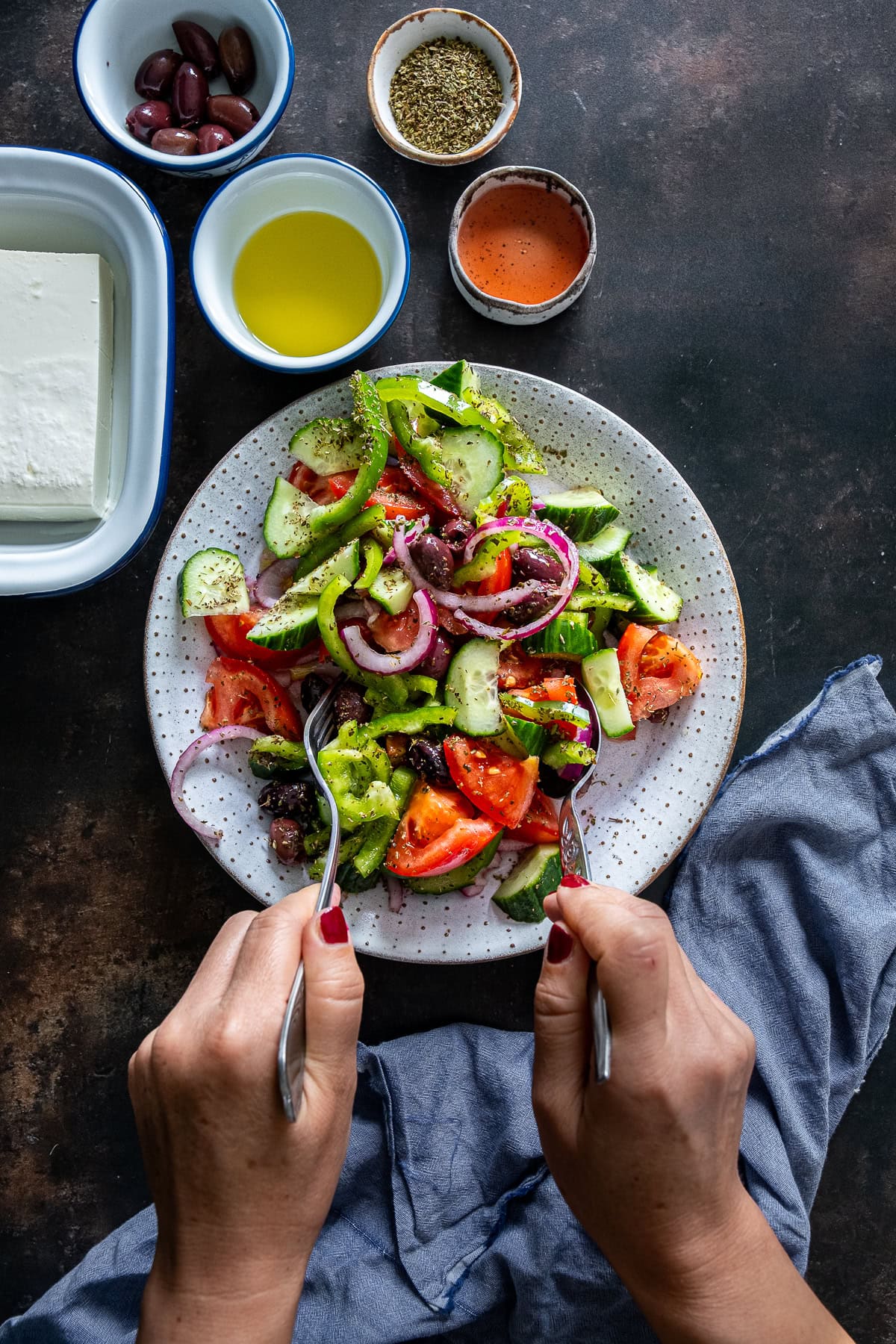
- Sliced onions (sometimes red, sometimes white, but never spring onions)
- Ripe, juicy tomatoes (roughly chopped, big ones – never cherry tomatoes)
- Cucumber (sometimes with the skin / seeds, sometimes without)
- Green bell pepper
- Kalamata olives (the purple-coloured ones)
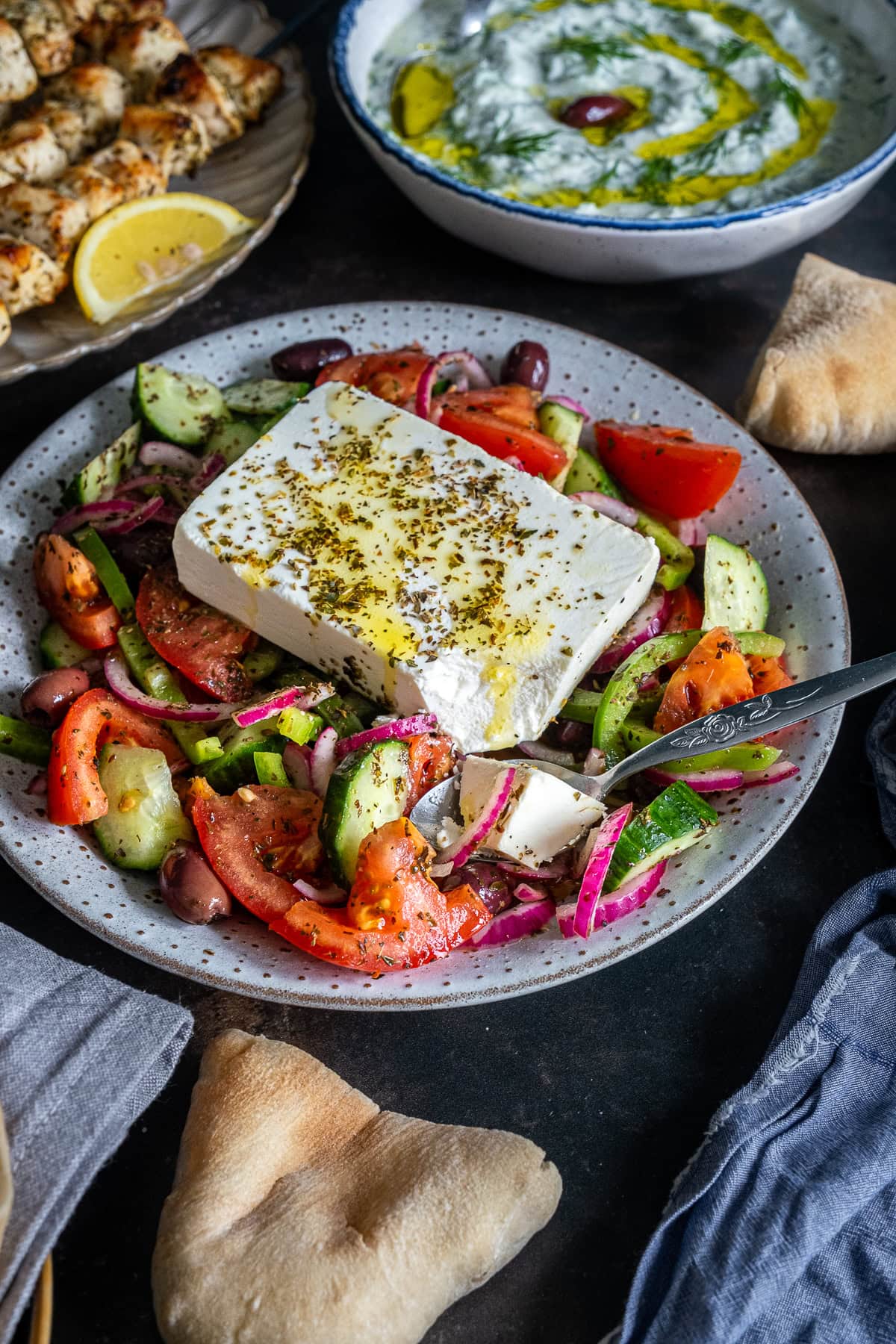
- A whole block of feta (never cubed, though sometimes crumbled mizithra cheese is used instead in Crete and a few other islands)
- Red wine vinegar (occasionally this is left out altogether)
- Extra virgin olive oil (Greek, obviously!)
- Dried oregano
- Salt and black pepper
Authentic Greek Salad never contains lettuce! Nor does it contain other colours of pepper, potatoes, carrots, beetroot, chickpeas, capers, eggs etc.
Obviously you can add whatever you like! But if you want the most authentic version, then stick to the classic Greek ingredients.
How do you make an authentic Greek salad?
Making a classic Greek salad is so easy!
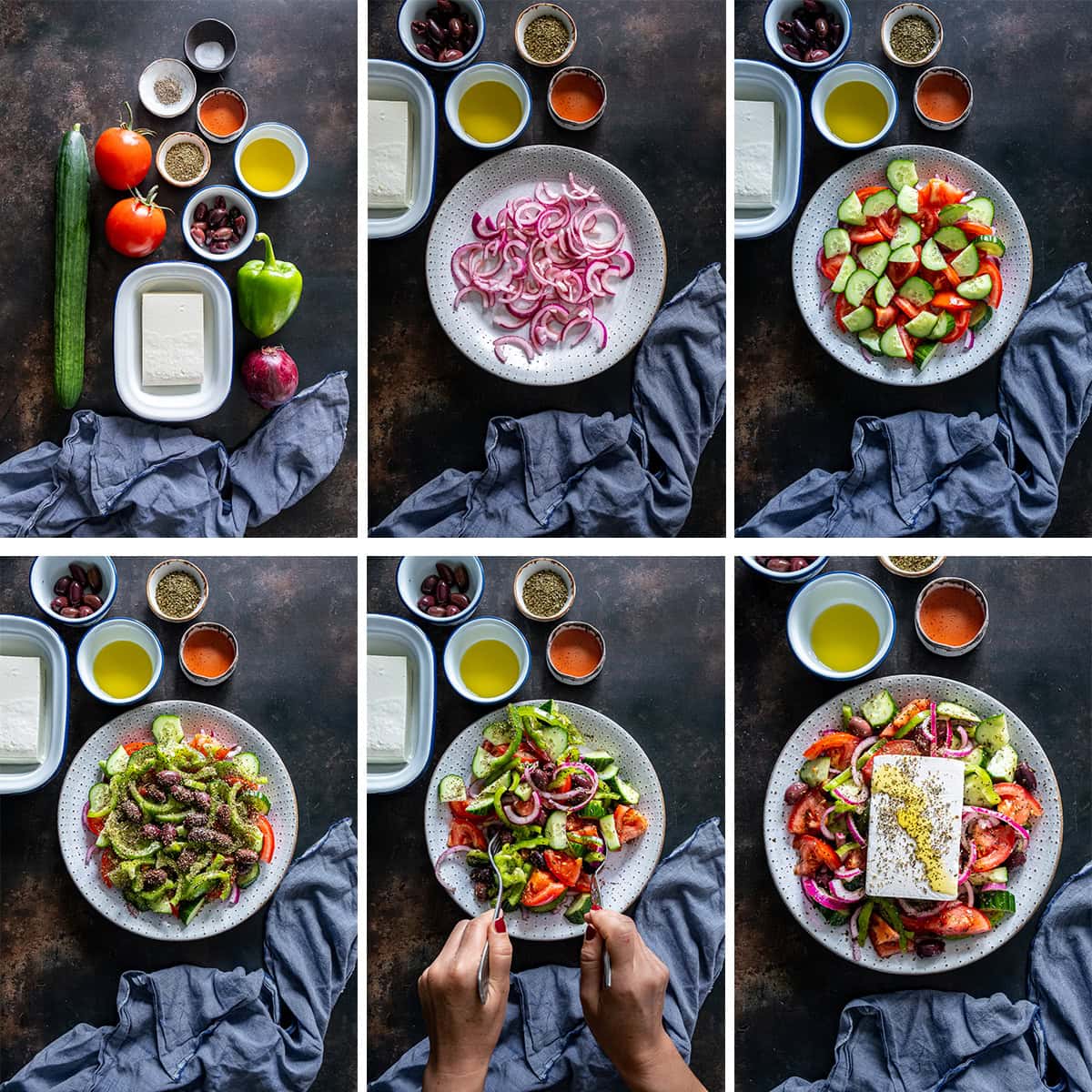
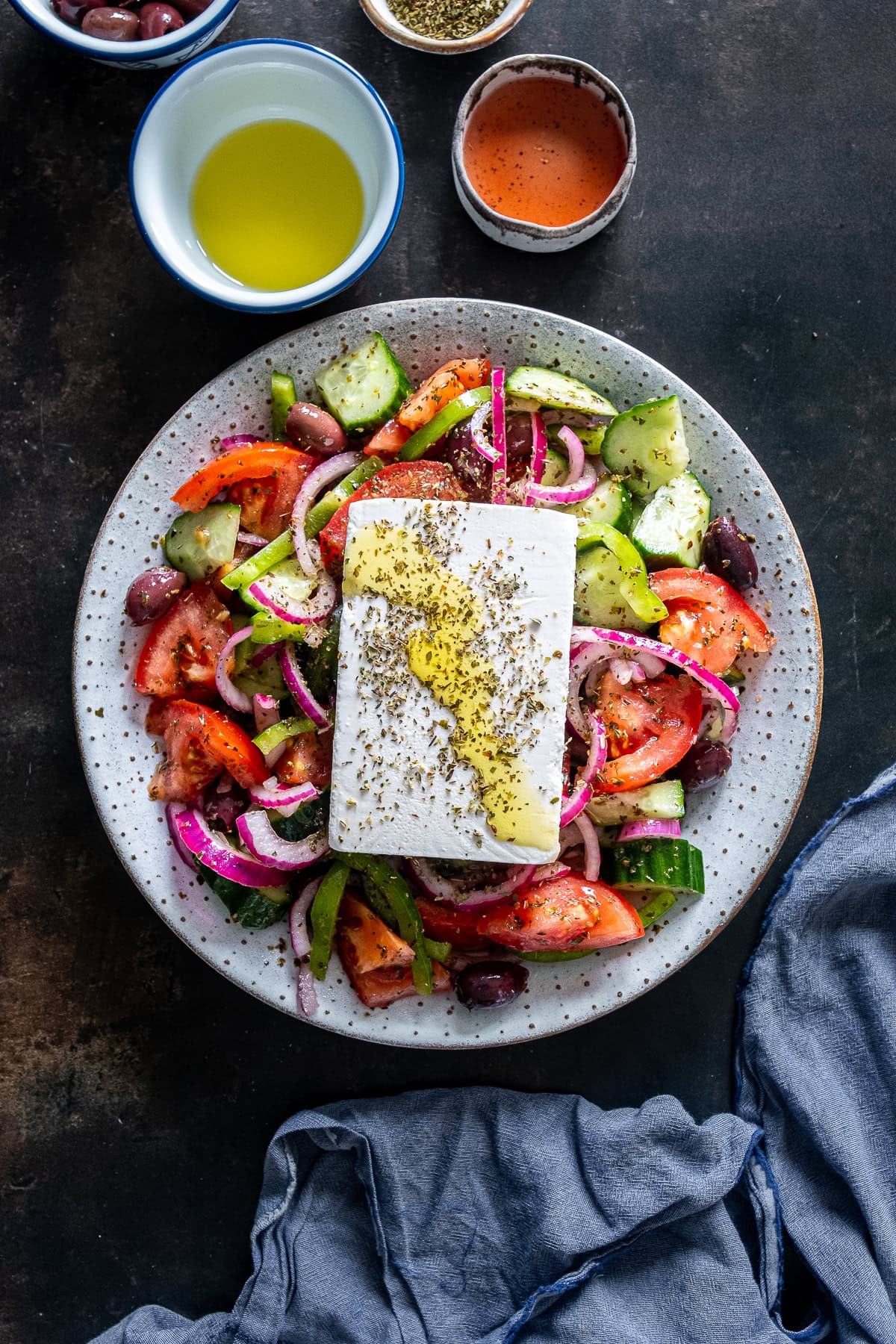
All you need to do is place sliced red onion, red wine vinegar, roughly chopped tomatoes and cucumber in a bowl, together with sliced green pepper, kalamata olives, olive oil, oregano and salt. Stir thoroughly, then top with the whole block of feta. Sprinkle over the a little more dried oregano, add a few twists of black pepper, then drizzle with more olive oil.
(Full recipe given in the recipe card below.)
Full confession: there is one thing I’ve changed…
OK confession time – I do make one very small adaptation to the classic Greek salad recipe – but for a really good reason!
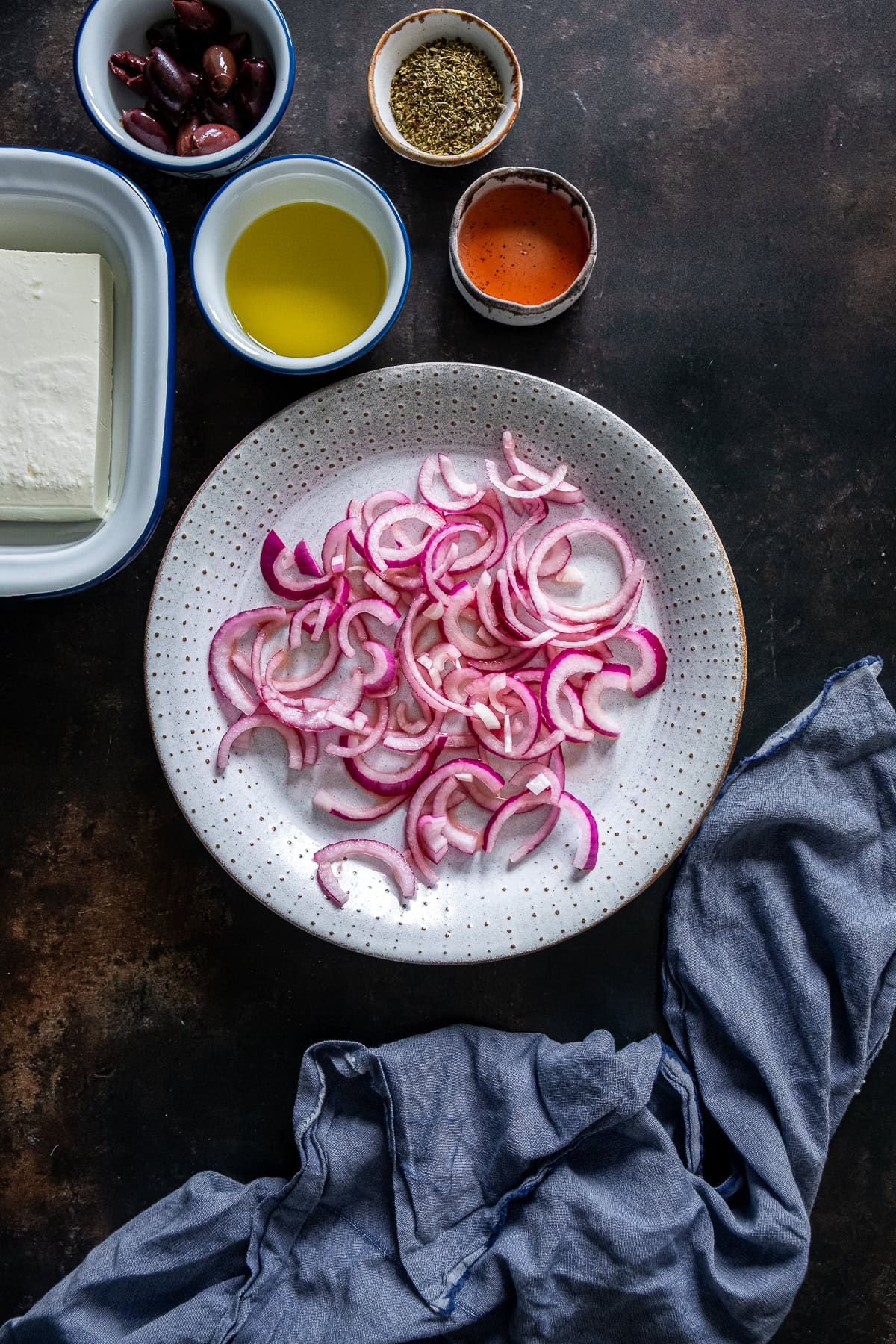
I always place the onions and red wine vinegar in the bowl first, and I use my fingers to sort of “rub” the vinegar into the sliced onion.
This does two important things: firstly, it softens the flavour of the onions, and secondly, it very much improves the flavour of the dressing.
It’s a very tiny tweak, but it’s not strictly “authentic”, so if you want an even more authentic version of this salad, simply add the red wine vinegar at the same time as the olive oil.
What to serve with Greek salad
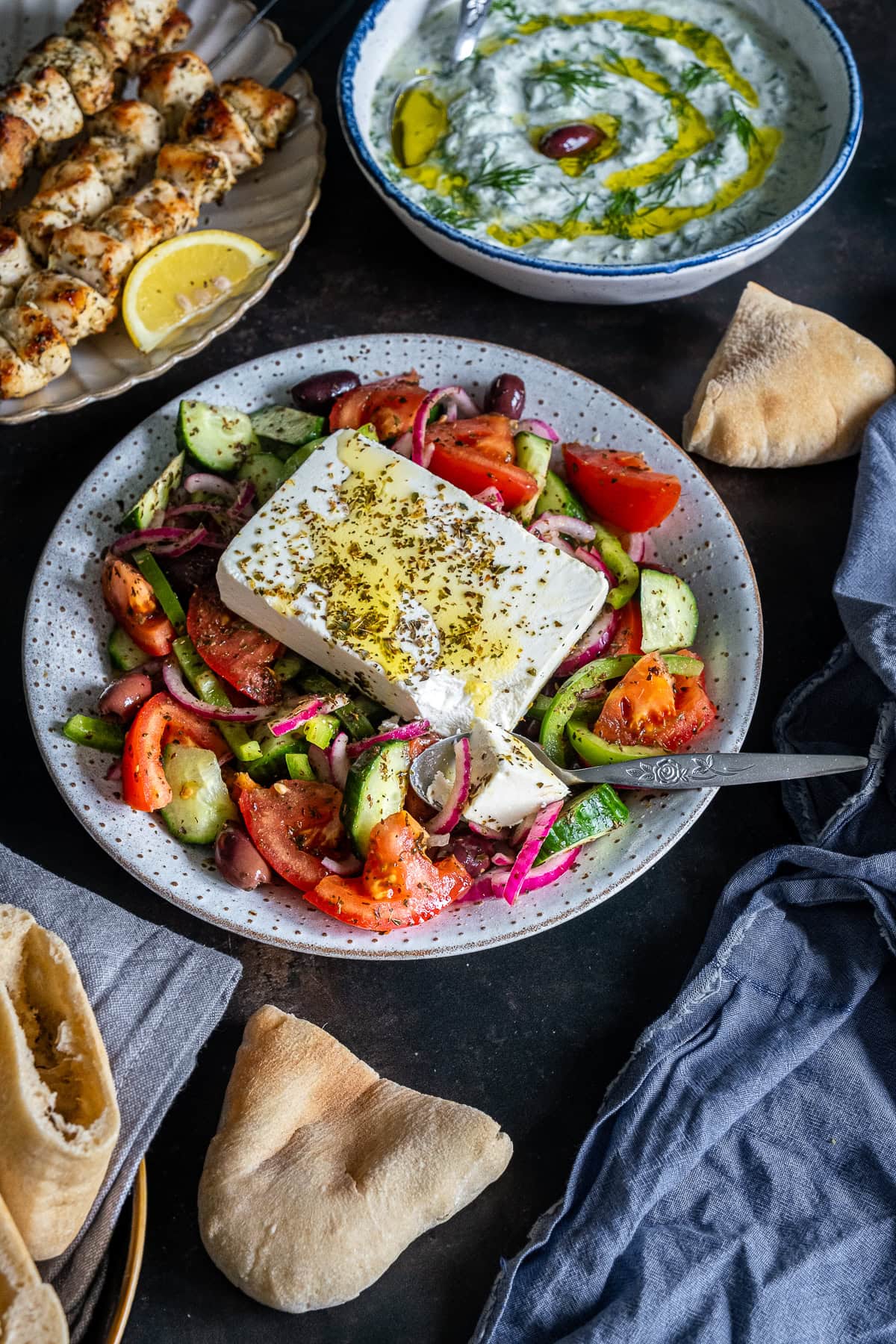
This Authentic Greek Salad pairs beautifully with all your favourite Greek and Greek Inspired recipes.
For example…
- Easy Chicken Souvlaki
- Easy Lamb Souvlaki
- Greek Roast Chicken & Potatoes
- Easy Lamb Moussaka
- Authentic Greek Tzatziki
- Easy Homemade Pittas
Greek Salad also goes very well with lots of non-Greek food, such as Chicken Schawarma, Shish Kebabs, Chicken Tikka and Lamb Koftes.
Alternatively, you can eat Greek salad on its own, with a side of warm, freshly baked pitta bread to dunk into that delicious dressing!

Easy Chicken Souvlaki
What to drink with Greek salad
Greek Salad naturally pairs very well with Greek white wines, especially Assyrtiko.
It also goes well with New Zealand Sauvignon Blanc, Austrian Grüner Veltliner and Italian Pinot Grigio.
Alternatively, this dish will also pair well with dry, fruity rosés.
I would generally avoid red wines, if you are eating Greek salad as the main dish. However, if your main dish is something that pairs best with red wine (e.g. Lamb Moussaka) then pick something that goes best with your main dish.
What to do with leftover Greek Salad
Because Greek Salad does not contain lettuce, it does keep better than most salads. And you can certainly get away with putting the leftovers in the fridge for the next day. (And in fact, it will just about keep for a second day… at a push!)
That being said, I do think this salad tastes at its very best the day you make it.
Can you freeze Greek Salad?
No, Greek salad does not freeze well.
If you like this recipe…
…you might also like:
- Easy Beetroot Salad
- Roasted Squash & Beetroot Salad with Feta and Walnuts
- Fruity Couscous Salad
- Easy Creamy Potato Salad
- Kachumber Salad
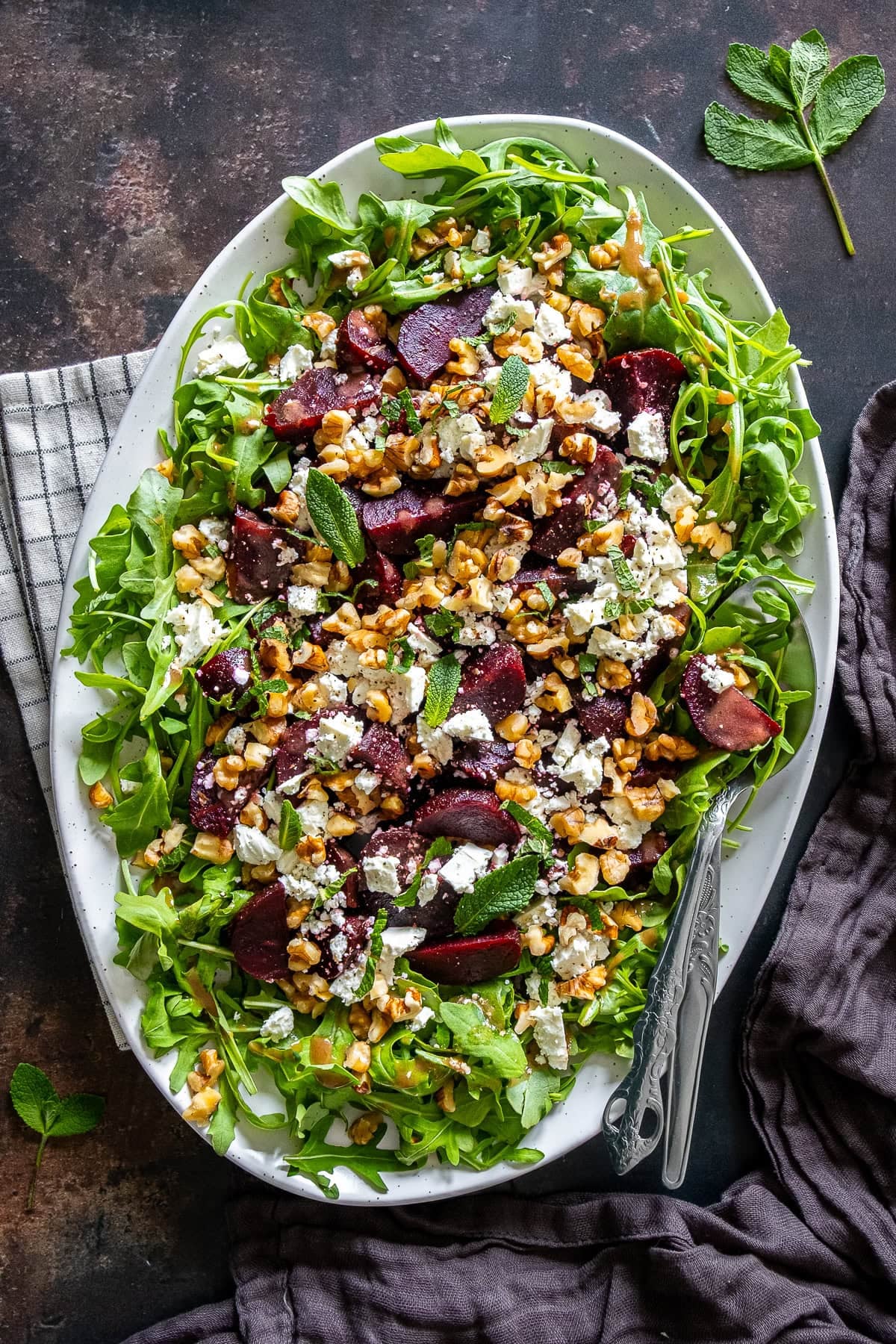
Easy Beetroot Salad
Authentic Greek Salad (Horiátiki Salata)
Ingredients
- ½ red onion sliced finely
- 2 tablespoons red wine vinegar
- 200 g large ripe tomatoes (the best you can find), roughly chopped
- 150 g cucumber roughly chopped (See Note 1)
- 1 small green bell pepper thinly sliced
- 15 kalamata olives stones removed
- 3 tablespoons extra virgin olive oil (ideally Greek!)
- 3 teaspoons dried oregano
- ½ teaspoon salt (or to taste)
- 150 g block Greek feta left whole (See Note 2)
- Black pepper
Instructions
- Place the finely sliced red onion and 2 tablespoons red wine vinegar in the bottom of a large salad bowl. Rub the vinegar into the onion. (See Note 3.)
- Add the roughly chopped tomatoes and cucumber, together with the green pepper, kalamata olives, 2 tablespoons of the olive oil, 2 teaspoons of the oregano and all the salt.
- Stir thoroughly, then top with the whole block of feta. Sprinkle over the remaining 1 teaspoon of oregano, add a few twists of black pepper then drizzle with the remaining 1 tablespoon of olive oil.
Notes
- Some recipes call for the removal of both the cucumber skin and the seeds. Personally I see no need for that – it feels like extra, unnecessary effort and it also seems a little wasteful. However, if you prefer, you can of course remove the skin/seeds. In which case, you will need 150g / 5oz cucumber AFTER you’ve removed the skin and seeds.
- Feta is traditionally served in one piece on top of a Greek salad. However, if you prefer, you can cut it into cubes prior to serving or crumble it over the top. You can also use mizithra cheese in place of feta, if you can find it. Mizithra cheese is often used in place of feta in Crete and IMHO it’s even nicer than feta – but it’s really hard to find in the UK!
- This step is not strictly “authentic” and you can absolutely leave this step out if you want a super authentic Greek salad… BUT, if you do this step, you’ll get much nicer tasting onions and you’ll get a much nicer tasting dressing – so why wouldn’t you do this? Basically, by first mixing the onions and vinegar together you soften the flavour of the onions while also transferring some of that onion flavour to the dressing… it’s a tiny extra step, but well worth it!
- Not suitable for freezing.
- Nutrition information is approximate and meant as a guideline only.
Pin Authentic Greek Salad for later

FREE 4 Week Easy Dinners Meal Plan
Have you got your hands on a copy of my meal plan yet? If not CLICK HERE to download a copy of my FREE 4 Week Easy Dinners Meal Plan today!
Leave a Reply